A Taste of Two Worlds: Unpacking the Culinary Kinship of Spain and Morocco
两种风味的交织:探寻西班牙与摩洛哥美食的烹饪渊源
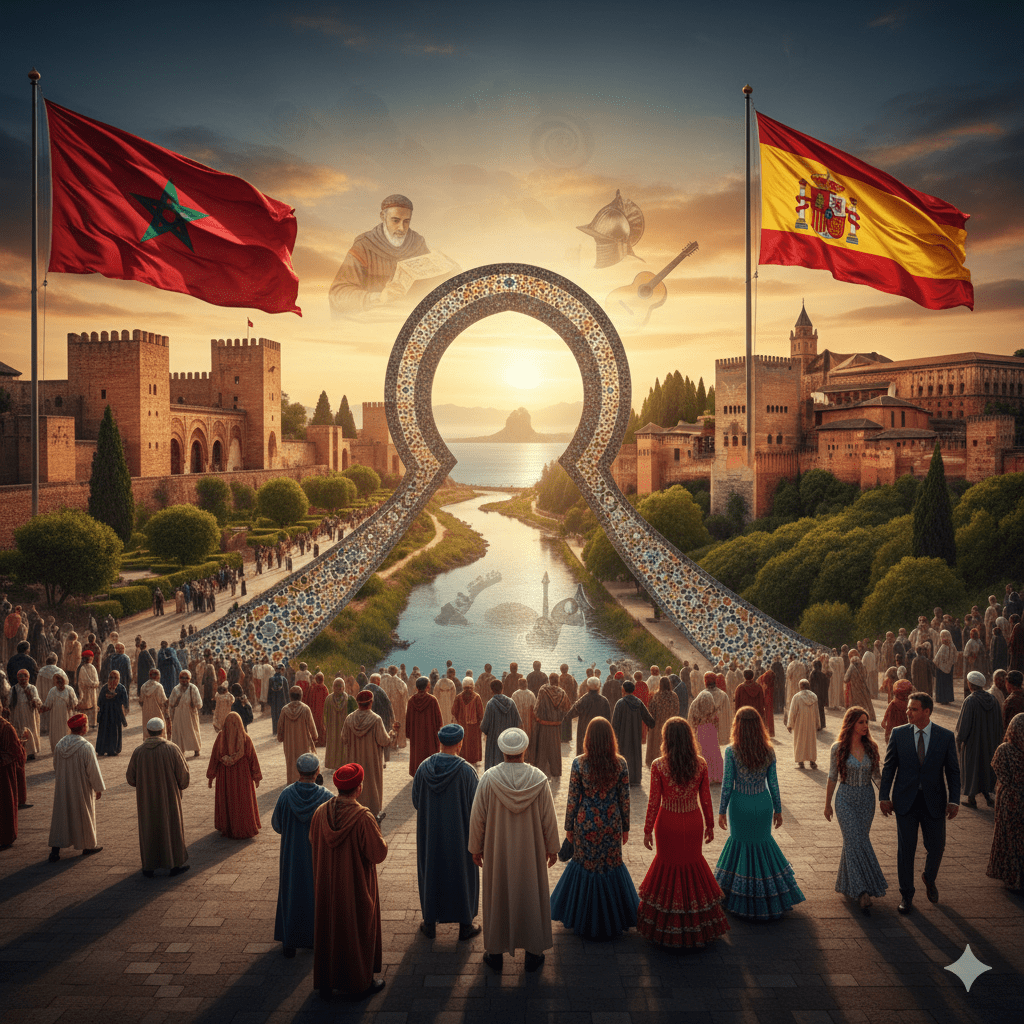
Across the Strait of Gibraltar, two vibrant cultures share a culinary language surprisingly rich in commonalities. Spanish and Moroccan cuisines, while distinct in their individual expressions, boast a shared heritage that speaks of centuries of intertwining histories, trade, and cultural exchange. It’s a relationship best savored, one delicious bite at a time.
横跨直布罗陀海峡,两种充满活力的文化共享着一种惊人地丰富且共通的烹饪语言。西班牙和摩洛哥美食,虽然在各自的表达上有所不同,但都拥有共同的遗产,这讲述了几个世纪以来相互交织的历史、贸易和文化交流。这种关系最好细细品味,一口美味接着一口。
Imagine a bustling market scene – perhaps the vibrant souks of Marrakech or the lively Mercado de San Miguel in Madrid. What you’d find are not just different ingredients, but often the very same ones, elevated in diverse yet familiar ways.
想象一个熙熙攘攘的市场场景——也许是马拉喀什充满活力的露天市场,或者是马德里热闹的圣米格尔市场。你所会发现的,不仅是不同的食材,而且常常是相同的食材,以多样化而又熟悉的方式被提升其风味。

A Historical Medley of Flavors 风味的历史融合
The most significant bridge between these two culinary worlds is undoubtedly the period of Al-Andalus, when much of the Iberian Peninsula was under Muslim rule for nearly eight centuries. This era saw a profound exchange of ingredients, cooking techniques, and gastronomic philosophy that left an indelible mark on both sides.
这两个烹饪世界之间最重要的桥梁无疑是安达卢斯时期,当时伊比利亚半岛的大部分地区在穆斯林统治下近八个世纪。这个时代见证了食材、烹饪技术和美食哲学的深刻交流,给双方都留下了不可磨灭的印记。
Spices: The Soul of the Dish 香料:菜肴的灵魂
Both cuisines are renowned for their aromatic spices. Cumin, coriander, saffron, paprika, and cinnamon are staples in both Spanish paellas and Moroccan tagines. While the ratios and specific blends might differ, the underlying principle of building complex flavor profiles through a judicious use of spices is a powerful connection. Think of the warm, earthy notes in a Moroccan harira soup or a Spanish lentil stew – the comforting aroma is instantly recognizable.
两种菜肴都以其芳香的香料而闻名。孜然、香菜、藏红花、辣椒粉和肉桂都是西班牙海鲜饭和摩洛哥塔吉锅中的主食。虽然比例和具体混合可能有所不同,但通过巧妙使用香料构建复杂风味的基本原则是一个强大的联系。想想摩洛哥哈里拉汤或西班牙扁豆炖菜中温暖、泥土般的味道——那种令人舒适的香气是即刻可辨的。
Rice: The Versatile Grain 米饭:多功能谷物
Rice, introduced to Spain by the Moors, became a cornerstone of Spanish cuisine, culminating in the iconic paella. Moroccan cuisine also features rice prominently, often as a side dish, in stuffed vegetables, or in more elaborate festive preparations. The ability of both cultures to transform simple grains into culinary masterpieces is a testament to their shared history.
米饭由摩尔人引入西班牙,成为西班牙美食的基石,最终形成了标志性的海鲜饭。摩洛哥美食也大量使用米饭,通常作为配菜、填充蔬菜或更精致的节日准备。两种文化都能够将简单的谷物转化为烹饪杰作,这证明了它们的共同历史。
Citrus and Olives: Mediterranean Staples 柑橘和橄榄:地中海主食
The abundant use of citrus, particularly lemons, and olives is another striking similarity. From preserved lemons in Moroccan tagines to the ubiquitous use of olive oil in Spanish cooking and the olives served alongside almost every meal, these ingredients are fundamental. They speak to the shared Mediterranean climate and its generous bounty.
大量使用柑橘,特别是柠檬和橄榄是另一个显著的相似之处。从摩洛哥塔吉锅中的腌制柠檬,到西班牙烹饪中无处不在的橄榄油,以及几乎每餐都伴随的橄榄,这些食材都是基础。它们诉说着共同的地中海气候及其丰富的物产。
Beyond Ingredients: Shared Techniques and Dishes 超越食材:共享的烹饪技巧和菜肴
It’s not just the ingredients that resonate; many cooking techniques and even entire dish concepts show remarkable parallels.
不仅仅是食材产生共鸣;许多烹饪技术甚至整个菜肴概念都显示出显著的相似之处。

Stewing and Slow Cooking: Both cultures excel at slow-cooked stews. The Moroccan tagine, a clay pot designed for gentle, long cooking, finds its echo in Spanish guisos and estofados, which prioritize tender meats and vegetables simmered to perfection.
炖煮和慢炖:两种文化都擅长慢炖菜肴。摩洛哥塔吉锅,一种专为温和长时间烹饪设计的陶罐,在西班牙的炖菜(guisos 和 estofados)中找到了共鸣,这些炖菜都优先考虑将肉类和蔬菜炖煮至完美软烂。
Fried Delights: From Moroccan briouats (flaky pastries often filled with meat or cheese) to Spanish empanadas or croquetas, the love for crispy, fried parcels is evident. These bite-sized delights are perfect for sharing and embody the communal spirit of both culinary traditions.
油炸美食:从摩洛哥的 briouats(通常填充肉类或奶酪的薄皮糕点)到西班牙的 empanadas 或 croquetas,对酥脆油炸小吃的喜爱显而易见。这些一口大小的美食非常适合分享,体现了两种烹饪传统的共享精神。
Sweet and Savory Combinations: The artful blending of sweet and savory flavors is a hallmark of both cuisines. Moroccan tagines often incorporate dried fruits like apricots or prunes with meat, a practice that mirrors the use of raisins or prunes in some Spanish meat dishes or the sweet-and-sour notes found in certain escabeche preparations.
甜咸组合:巧妙地混合甜味和咸味是两种美食的标志。摩洛哥塔吉锅通常将杏干或梅干等干果与肉类结合,这种做法与西班牙一些肉类菜肴中使用葡萄干或梅干,或某些腌制菜肴(escabeche)中发现的酸甜味相呼应。
A Culinary Journey Worth Taking 一场值得开启的烹饪之旅
While differences certainly exist – the prevalence of pork in Spain versus its absence in Morocco, or the distinct emphasis on specific spice blends – the overarching similarities offer a captivating culinary journey. Exploring Spanish and Moroccan cuisines side-by-side reveals a beautiful story of cultural exchange, shared history, and the universal language of good food.
虽然差异确实存在——例如西班牙猪肉的普遍性与摩洛哥的缺失,或者对特定香料混合的独特强调——但总体上的相似之处提供了一段迷人的烹饪之旅。并排探索西班牙和摩洛哥美食,揭示了一个美丽的文化交流、共享历史和美食这一通用语言的故事。
So, next time you’re savoring a fragrant paella or digging into a tender lamb tagine, take a moment to appreciate the subtle echoes of a shared past that continue to delight palates on both sides of the Strait.
所以,下次当你品尝芬芳的海鲜饭或享用鲜嫩的羊肉塔吉锅时,花点时间品味一下共享历史的微妙回响,这些回响继续愉悦着海峡两岸的味蕾。